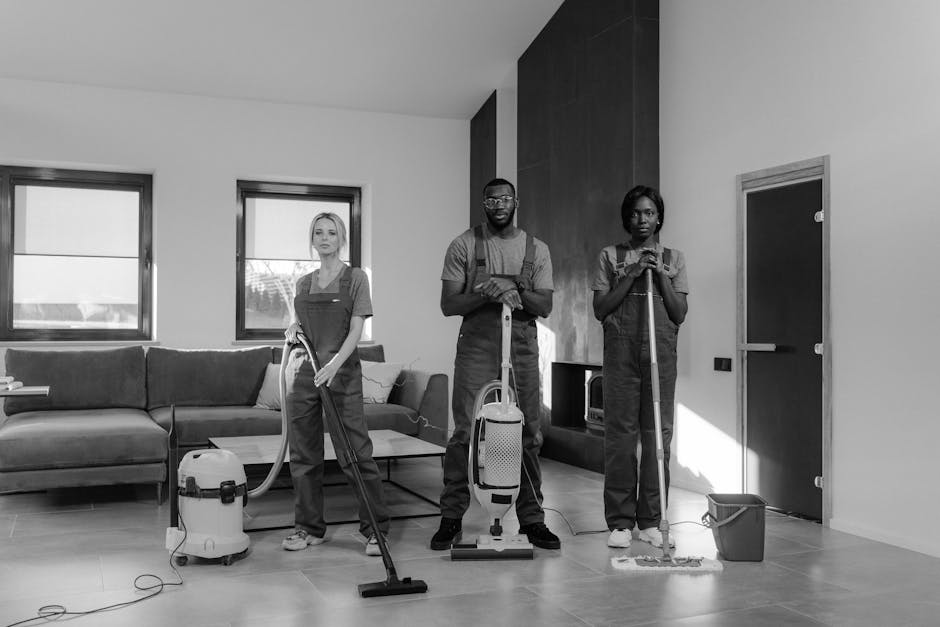
How to Compare Cleaning Service Quotes for End of Tenancy Jobs in the UK
If you are moving out, juggling keys, boxes, deposits, and a last-minute sweep of the skirting boards, comparing cleaning service quotes can feel oddly stressful. The good news is that How to compare cleaning service quotes for end of tenancy jobs UK is not complicated once you know what to look for. The difference between a fair quote and an expensive one often comes down to scope, exclusions, and whether the cleaner actually understands tenancy expectations. This guide breaks it down in plain English, so you can compare like with like and make a calm, sensible decision.
In practice, the cheapest quote is rarely the best value, and the most expensive one is not automatically superior either. You want a clear price, a clear scope, and a provider who knows what a proper end of tenancy clean really involves. Let's get into it.
In our experience, the biggest mistake tenants make is comparing only the headline price. That number might look neat on a phone screen, but the real story is usually in the fine print. And yes, the fine print is where the headaches live.
Table of Contents
- Why comparing end of tenancy cleaning quotes matters
- How quote comparison usually works
- Key benefits and practical advantages
- Who this is for and when it makes sense
- Step-by-step guidance
- Expert tips for better results
- Common mistakes to avoid
- Tools, resources and recommendations
- Law, compliance, standards and best practice
- Options, methods and comparison table
- Case study or real-world example
- Practical checklist
- Conclusion
- Frequently asked questions
Why Comparing End of Tenancy Cleaning Quotes Matters
End of tenancy cleaning is not just a normal tidy-up. It is a detailed, room-by-room clean designed to leave the property in a presentable condition for the next occupant and, more importantly, to reduce the risk of deposit disputes. That means a quote needs to reflect far more than a quick hoover and a wipe of visible surfaces.
When you compare quotes properly, you are looking for three things: clarity, coverage, and confidence. Clarity tells you what is included. Coverage shows whether the service matches the property and the inventory condition. Confidence comes from the company's answers, not just its price list.
A vague quote can be cheap for a reason. Maybe it excludes ovens, interior windows, limescale removal, or bathrooms. Maybe it assumes an empty property when yours still has bits left behind. Maybe it is based on a one-bedroom flat but you have a two-bed with carpets that need extra care. That is where comparisons go wrong.
For many tenants, landlords, and letting agents, a clean that is too light leads to pushback at checkout. On the other hand, a quote that is over-specified can mean paying for tasks you simply do not need. So yes, it matters. Quite a bit.
How Comparing Cleaning Service Quotes for End of Tenancy Jobs Works
The process is basically a structured comparison exercise. You gather a few quotes, check what each one includes, and then line them up against the actual condition of your property. The key is to compare on the same basis, not on loosely similar words.
A good quote usually depends on the property size, whether it is furnished or unfurnished, the level of dirt, and any extras such as carpet cleaning or oven cleaning. Some providers quote by property type, others by number of rooms, and some by hourly labour. Each method can be valid, but they are not directly interchangeable without adjustment.
To be fair, the most useful quote is the one that explains itself. If the company has taken time to ask about the bathroom grout, the kitchen extractor, or whether you need a professional oven clean, that is usually a good sign. It suggests they are pricing a real job, not just tossing out a rough number.
You should also notice how the quote is delivered. Is it written? Does it list the rooms? Does it mention add-ons? Does it say what happens if the final condition is different from what was described? A proper comparison needs those details, otherwise you are comparing shadows, not services.
Key Benefits and Practical Advantages
Taking a few extra minutes to compare cleaning quotes properly brings some very real benefits.
- Better value for money: you avoid paying for vague promises or unnecessary extras.
- Lower risk of disputes: a detailed service is easier to match against tenancy expectations.
- More predictable budgeting: no one likes a surprise call saying the quote was "just an estimate" after the work starts.
- Improved service fit: you can choose a provider that actually matches the property type and cleanliness level.
- Stronger trust: companies that explain their pricing usually communicate better throughout the job.
There is another advantage that gets missed. When you compare well, you get better at spotting which cleaning companies are genuinely experienced with end of tenancy jobs and which ones mostly do general domestic cleaning. A deep-clean quote can look similar on the surface, but the detail tells the real story. If you want to understand the broader cleaning approach behind a quote, looking at a provider's deep cleaning service can help you see how they define a more thorough clean.
The practical result? Fewer surprises, less back-and-forth, and a cleaner handover. That is the whole point really.
Who This Is For and When It Makes Sense
This matters if you are a tenant getting ready to move out, a landlord preparing a property for re-let, a letting agent arranging a turnaround clean, or even a homeowner selling a place that needs to look properly cared for. It also makes sense if you are comparing a few different providers because you have a tight moving window and need certainty more than anything else.
You may need quotes especially if:
- the property has been lived in for a long time;
- there are carpets, upholstery, or rugs that need attention;
- the oven is heavy with grease;
- the bathroom or kitchen has built-up residue;
- the property is furnished and needs more detailed work;
- the checkout date is fixed and there is no room for rebooking.
It also makes sense if you are comparing end of tenancy cleaning against a general one-off cleaning option. Those are not always the same thing. A one-off clean can be useful, but it may not be packaged around tenancy handover expectations unless the provider specifically says so.
If your property has more specialised surfaces, it can help to ask whether the quote accounts for them. For example, hard floors, delicate upholstery, or stubborn carpet marks can change the scope quite a lot. Not every cleaner prices the same way, and that is normal. But you need to know which bits are included.
Step-by-Step Guidance
Here is the simplest way to compare quotes without getting bogged down.
- List the rooms and condition honestly. Include kitchen, bathrooms, bedrooms, living areas, hallways, and any utility spaces. Be specific about stains, grease, limescale, or pet hair.
- Ask for itemised quotes. A line for oven cleaning, carpet work, windows, or extras is much easier to compare than one lump sum.
- Check whether VAT is included. A quote can look low until tax is added. Always confirm the final figure.
- Confirm access and parking assumptions. If the cleaner needs permits, stair access, or a time window, that can affect price.
- Ask what is excluded. This is the bit people skip. Don't. Exclusions are where quote comparisons become misleading.
- Compare service scope, not just price. A slightly higher quote that includes more rooms and extras may be the better value.
- Review safety, insurance, and complaint handling. If something goes wrong, you want a proper process in place.
- Book only when the quote matches your actual job. If the property changes, tell the company before the clean starts.
A useful habit is to create a very simple comparison note on your phone or laptop. Two or three columns are enough: company name, included tasks, final price. Nothing fancy. It sounds basic, but it stops you from choosing the first quote that lands in your inbox at 7:42 pm while you are standing in a half-packed kitchen.
If the provider offers a pricing page, use it as a reference point rather than gospel. A clear pricing and quotes page can be a helpful starting place, but the final comparison should still be based on your own property details.
Expert Tips for Better Results
Here is where the small details start paying off.
First, ask the same questions of every provider. If one company gets asked about ovens, carpets, and interior windows while another gets only "how much?", your comparison is already tilted.
Second, be careful with "from" prices. A "from GBPX" figure can be perfectly legitimate, but only if you know what conditions trigger the higher rate. Otherwise it is a bit like saying a moving van costs "from cheap." Not very useful, is it?
Third, check the company's practical standards. If a cleaner can explain their approach to safety, insurance, and check-in/check-out expectations, that is reassuring. A company that takes those areas seriously often takes the clean seriously too. You can usually get a sense of this from pages such as insurance and safety information and health and safety guidance.
Fourth, look for honesty in the language. Good cleaners will say what they can do, what they need from you, and what may cost extra. That honesty is worth more than slick wording.
Fifth, think about the wider move-out job. Sometimes the best choice is not the cheapest clean, but the clean that removes pressure. If you are still sorting furniture, boxes, or leftover items, you may also need house clearance support, or at least a separate plan for what remains in the property.
Truth be told, the best quote is usually the one that leaves you with fewer questions.
Common Mistakes to Avoid
Most quote mistakes are easy to avoid once you know them.
- Choosing on price alone: cheap can mean partial coverage, rushed work, or hidden extras.
- Not describing the property properly: if the oven is blackened and the quote assumes it is lightly used, there will be friction later.
- Ignoring exclusions: windows, appliances, carpets, and upholstery are common omissions.
- Forgetting about access issues: top-floor flats, restricted parking, or narrow time windows can affect the final cost.
- Assuming all "end of tenancy" services are identical: they are not. One provider's standard clean may be another's deep clean.
- Missing the cancellation or rescheduling terms: moving dates do change. It happens. More often than people admit.
- Overlooking insurance and complaints procedures: these are unglamorous, but useful if there is a problem.
There is also a softer mistake: rushing the decision because the move is already chaotic. A cup of tea, ten minutes, and a proper comparison can save a lot of grief later. Honestly, it is one of the few times where slowing down is the smarter move.
Tools, Resources and Recommendations
You do not need expensive software to compare cleaning quotes well. A notes app, spreadsheet, or even a paper checklist will do the job. The trick is consistency.
Useful things to keep to hand:
- a room-by-room inventory of the property;
- photos of problem areas;
- the tenancy agreement or checkout requirements, if available to you;
- measurements or rough room sizes;
- a list of extras such as oven, carpets, or upholstery;
- access details, parking notes, and preferred time windows.
If you are comparing providers, it can also help to look at the company's service range. For example, if your property needs a deeper kitchen reset, an oven cleaner add-on may be relevant. If carpets are part of the issue, a dedicated carpet cleaning service can make the final comparison more accurate. And if the property has windows that need attention inside and out, check whether window cleaning is available as an extra or built into the quote.
For companies with a broader cleaning portfolio, browsing pages such as cleaning company, cleaners, or home cleaners can help you understand the scope of work they handle day to day. That is not a guarantee of quality, of course, but it does show whether they are used to domestic and tenancy-style jobs.
Law, Compliance, Standards and Best Practice
End of tenancy cleaning sits in a practical grey area rather than a single neat rulebook. What matters most is that the service is described accurately, delivered as agreed, and supported by sensible business practices.
From a UK perspective, good practice usually means:
- clear pricing and no misleading headline claims;
- transparent exclusions and add-on costs;
- reasonable booking terms and cancellation policies;
- appropriate insurance for the work carried out;
- safe cleaning methods and staff training;
- respect for privacy, property access, and customer information.
Tenants should also remember that deposit outcomes often depend on the property condition, the inventory, and the agreement between tenant and landlord or agent. A professional clean can help, but it does not magically override what was already recorded. So keep expectations grounded. A good cleaner can make a big difference, but they are not a courtroom, let's face it.
If you want to feel more confident about the service side, review the company's terms and conditions, privacy policy, and any published approach to complaints handling. Those pages can tell you a lot about how a business operates when things go smoothly and when they do not.
Options, Methods and Comparison Table
There are a few common ways end of tenancy cleaning quotes are structured. Each has strengths and weak points, depending on your property.
| Quote method | How it usually works | Best for | Watch out for |
|---|---|---|---|
| Fixed-price quote | One agreed price based on property details | Most tenants who want certainty | May exclude extras unless listed clearly |
| Room-based pricing | Price changes by number and type of rooms | Standard flats and houses | Stairs, utility rooms, and unusual layouts may be priced separately |
| Hourly rate | You pay for the time spent cleaning | Jobs with uncertain scope | Harder to predict total cost and completion time |
| Base price plus add-ons | A core clean with optional extras | Properties needing carpets, ovens, or windows | Can become expensive if many extras are needed |
For most end of tenancy jobs, a fixed-price quote with a clear scope is the easiest to compare. It reduces ambiguity and makes budgeting much simpler. Still, if your property is unusual or partly furnished, a base price plus add-ons may be more realistic. Neither is automatically better. The right choice depends on the job.
If you are comparing broader property-cleaning options too, a service such as house cleaning or domestic cleaning may be useful for understanding a provider's general cleaning style. For tougher situations, after builders cleaning shows how they handle heavier residue and mess, which can be a good sign if your tenancy property is in rough shape.
Case Study or Real-World Example
Imagine a two-bedroom flat in a busy UK city. The tenant has moved most belongings out, but the oven is greasy, the bathroom has limescale, and the carpets have a few marks near the sofa area. Three quotes come in:
- Quote A: lowest price, but it only includes rooms and surfaces, with oven and carpet cleaning charged separately.
- Quote B: mid-range price, with oven cleaning included and a clearly listed carpet add-on.
- Quote C: highest price, but it includes interior windows, appliances, bathrooms, and a re-clean guarantee if agreed issues are raised soon after the job.
At first glance, Quote A looks like the bargain. But once the extras are added, it may end up costing more than Quote B. Quote C might still be worth it if the property is time-sensitive and the tenant wants less risk. That is the key point: compare the total job, not the sticker price.
In real life, this kind of comparison often saves money and stress. A tenant sees where the quote gaps are, asks a couple of follow-up questions, and suddenly the decision becomes obvious. No drama. No guesswork. Just a clearer picture.
Practical Checklist
Use this before you book anything.
- Have I described the property accurately?
- Do I know exactly what is included in each quote?
- Are ovens, carpets, windows, and appliances covered or extra?
- Is VAT included in the final price?
- Are access, parking, and timing assumptions clear?
- Have I checked insurance and safety information?
- Do I understand the cancellation and complaints process?
- Have I compared like with like, not just the lowest number?
- Do I have a written quote I can refer back to?
- Would this service suit the actual condition of the property?
A final tip here: if something feels unclear, ask for it in writing. A two-line clarification now is much easier than a tense conversation later when the property is half-finished and everyone is looking at the same stubborn marks on the hob. Been there, done that, not fun.
Conclusion
Learning how to compare cleaning service quotes for end of tenancy jobs UK is really about becoming a sharper buyer. Once you focus on scope, exclusions, add-ons, and trust signals, the decision gets much easier. You do not need to be a cleaning expert. You just need a fair comparison and a few good questions.
The best quote is the one that fits the property, matches the move-out timeline, and gives you confidence that the job will be done properly. That is what helps protect time, money, and nerves. And during a move, all three matter.
Get a free quote today and see how much you can save.
If you are still deciding what level of service you need, it may be useful to revisit the provider's about us page, review their payment and security information, or explore whether a specialist end of tenancy cleaning service is the right fit for your move. A careful choice now can make the handover feel much lighter. And that, honestly, is a good way to leave a property behind.
Frequently Asked Questions
What should be included in an end of tenancy cleaning quote?
A proper quote should explain which rooms and surfaces are included, whether ovens and appliances are covered, and whether extras such as carpets, windows, or upholstery cost more. It should also make clear what is excluded so you are not left guessing.
Is the cheapest quote always the best choice?
No. The cheapest quote can become expensive if key tasks are missing or charged as add-ons later. The best value is usually the quote that covers the actual job clearly and leaves the fewest surprises.
Should I choose a fixed-price or hourly quote?
For most end of tenancy jobs, a fixed-price quote is easier to compare and budget for. Hourly quotes can work if the job is very uncertain, but they are harder to predict and compare fairly.
How many cleaning quotes should I get?
Three is usually a sensible number. That gives you enough variety to spot pricing patterns without drowning in options. Two can be too few, and five often becomes tedious very quickly.
Do I need to mention carpets and ovens separately?
Yes, absolutely. These are common extras and can change the price a lot. If your oven is heavily used or your carpets need attention, make sure the quote reflects that from the start.
How do I know if a quote is missing hidden costs?
Look for vague wording, "from" prices, or quotes that do not mention VAT, access issues, parking, or add-ons. If the provider cannot tell you what is excluded, that is usually a warning sign.
Does end of tenancy cleaning include windows?
Sometimes yes, sometimes no. Interior windows may be included in some packages, while full window cleaning may be treated as an extra. Always confirm this before you book.
What if the property is furnished?
Furnished properties often take longer because cleaners must work around furniture and clean more surfaces. Make sure the quote reflects that, especially if beds, sofas, rugs, or upholstery are staying in place.
Can I compare a general cleaning quote with an end of tenancy quote?
Only if the service scope is the same. A general domestic clean may not include the detail needed for a tenancy handover. Compare service descriptions carefully rather than relying on the name alone.
What documents should I keep after booking?
Keep the written quote, booking confirmation, payment receipt, and any messages confirming extras or exclusions. If there is a dispute later, those records can be very useful.
What should I ask before accepting a quote?
Ask what is included, what is extra, whether the quote is fixed or estimated, whether insurance is in place, and what happens if the final property condition differs from the description. Those questions are simple, but they do a lot of work.
How far in advance should I compare quotes?
Ideally a few days before your move, or sooner if you know your dates are fixed. Leaving it too late can limit your options and make comparison harder when you are already rushed.